Sculpture as Everyday Art: Curating a Home That Feels Like a Gallery
A gallery is not only defined by the art on its walls.
It is defined by space, light, rhythm, proportion, and restraint. It gives objects room to be seen. It allows texture to speak. It understands that a single strong form can be more powerful than a crowded room of decorative gestures.
The same principles can transform a home.
A gallery-inspired interior does not need to feel cold or precious. It can be comfortable, warm, and deeply personal. The goal is not to live inside a museum. The goal is to choose everyday objects with the same care you would give to art.
That is where sculptural living begins.
Start With One Focal Point
The fastest way to make a room feel curated is to give it a clear focal point.
This could be a wall sculpture above a console, a sculptural table in the center of a seating area, a statement lamp on a sideboard, or a bowl placed where it can be seen from multiple angles.
The Gold-Leaf Wave Relief Sculpture is a strong example. Its wave relief design brings movement and elegance to a wall, while its sand, plaster, and hand-leafed gold finish gives it material richness.
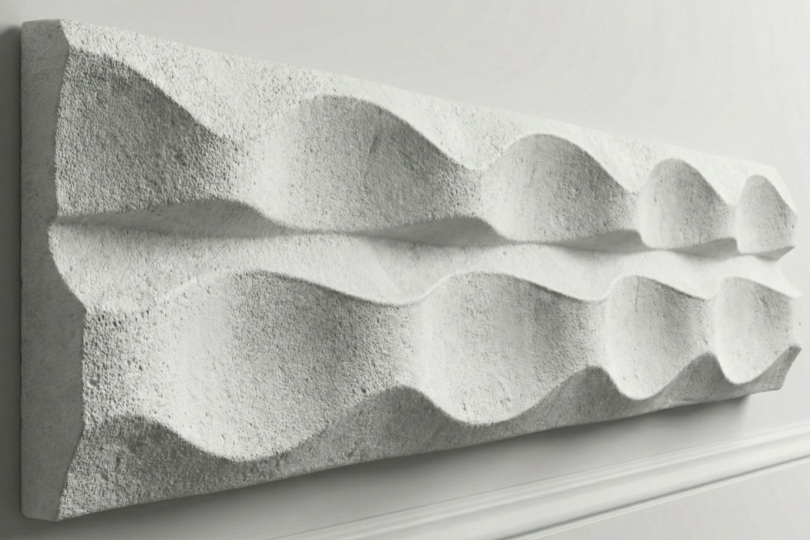
A sculptural wall relief becomes the focal point of a room, catching light and shadow across its surface.
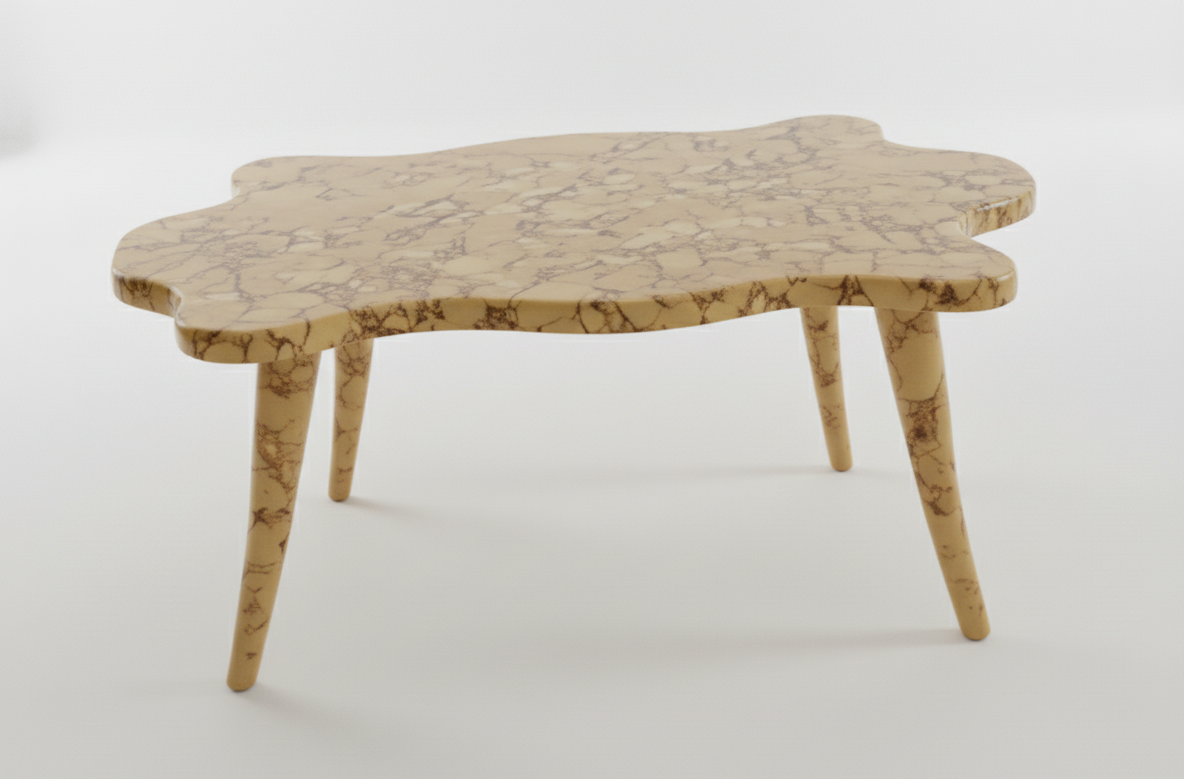
A functional table with a stone-patterned top doubles as a sculptural centerpiece.
A focal point does not need to dominate. It needs to focus attention. When you select one piece to lead the room, every other object can support it.
Use Negative Space as a Design Tool
In gallery-style interiors, empty space is not wasted space. It is what allows form to register.
Leave breathing room around sculptural objects. Do not crowd a wall relief with too many framed prints. Do not surround a statement bowl with unrelated accessories. Do not hide a sculptural table under stacks of books and flowers.
Negative space creates tension and calm at the same time. It says: this piece matters.
If you are styling the Marble Swirl Bowl, for example, place it alone on a dining table, console, or shelf, or pair it with only one complementary object. Its premium marble and unique swirling patterns are already visually active, so the surrounding arrangement should stay quiet.
Mix Function With Art
A home becomes more interesting when the functional objects have artistic presence.
A table can be sculpture. A lamp can be sculpture. A sconce can be sculpture. A mirror can be more than reflection. A bowl can be a centerpiece even when empty.
The Azure Elegance Art Table brings this idea into practical form. It is a functional table, but its blue stone-patterned tabletop and intricate iron legs give it the visual identity of an art piece.
The Green and Cream Lamp does something similar with lighting. It offers warm illumination, but the polished curved base gives the piece sculptural presence on a bedside table, reception desk, or sideboard.
When you choose functional art, you reduce the need for excess decoration. The room becomes richer with fewer objects.
Let Material Create the Mood
Gallery-inspired homes often rely on material contrast.
Smooth against rough. Matte against glossy. Stone against wood. Plaster against metal. Cream against deep color. Relief against flat wall.
Boldstone’s work is especially suited to this approach because the collection spans marbled surfaces, stone effects, gypsum, plaster, metal accents, gold leaf, and sculptural relief. The Services page lists finishes including matte, glossy or polished, multi-colored, gold leaf detailing, inlays, embeds, and etchings.
To create a gallery feeling at home, build a material palette before you add more objects. For example, a room might combine cream plaster walls, oak flooring, one green and cream lamp, a marble bowl, and a gold-leaf wall relief. Another might use dark timber, a blue stone-patterned table, black-framed art, and metallic lighting.
The palette gives the room coherence. The sculpture gives it soul.
Curate the Wall, Not Just the Shelf
Walls carry enormous potential.
A wall sculpture can replace a framed artwork, but it can also do something different. It casts shadows. It changes throughout the day. It turns light into part of the composition.
Boldstone’s Gallery page shows numerous relief-style wall pieces with shell, spiral, wave, and abstract carved forms, many displayed against brick, timber, or textured surfaces.
For a gallery-like wall, choose one sculptural piece and position it with intention. Center it above furniture, or deliberately offset it if the room is more contemporary. Add lighting from the side or above to emphasize relief. Keep nearby artwork minimal.
If you prefer more atmosphere, the Wall Circle introduces pattern, optional RGB lighting, multiple sizes, and indoor/outdoor versatility in temperate, sheltered environments.
Think in Compositions
A gallery home is built through compositions, not decoration.
A console composition might include a lamp, one bowl, and one wall piece. A living room composition might include a sculptural table, textured rug, and relief artwork. A bedroom composition might use a statement lamp, minimal bedding, and a single object on the bedside table.
The question is always: what is the relationship between these pieces?
Do the shapes echo each other? Do the colors create balance? Does one object lead while the others support? Does the arrangement feel intentional from across the room?
Live With Fewer, Stronger Objects
The most powerful interiors rarely contain the most things. They contain the right things.
Sculptural living is about choosing pieces that can hold attention over time. Objects with texture, depth, and presence do not need to shout. They keep revealing themselves slowly: in morning light, in evening shadow, from one angle and then another.
A home that feels like a gallery is not a home without life. It is a home where everyday life is surrounded by objects worth looking at.
Explore Boldstone’s Sculpture, Furnishings, and Gallery pages to begin curating a home where art is part of the everyday.